There are moments in recovery that quietly remind us why community, environment, and connection matter so much. Last night’s Recovery Reset was one of those nights.
After several days of being snowed in, everyone arrived with a kind of pent-up energy, ready to be out, ready to be together. As people trickled in, we naturally formed a large circle, pulling up chairs. Smiles, handshakes, hugs. Staff, residents, alumni, and friends from the recovery community all in one space, sharing the same warmth and familiarity that only comes from walking similar roads.
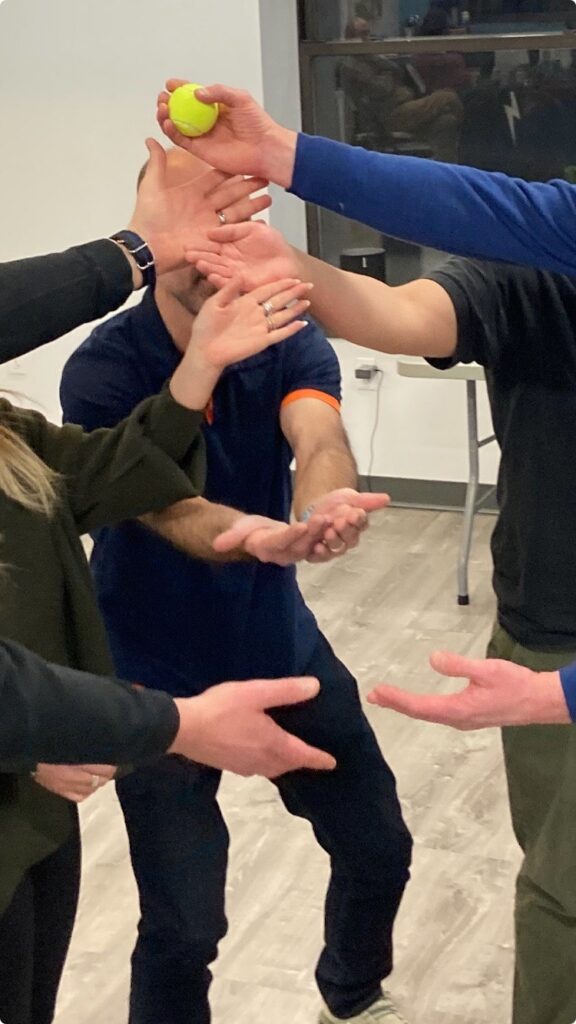
About a half-hour in, we set up a few simple ice-breaker and team-building games on a side table using red and silver Solo cups. Someone jokingly asked if we were about to play beer pong or flip cup. We split into two teams and before long everyone was leaning in, strategizing, cheering each other on, and working together. What started as something playful quickly became a shared experience of presence and connection, a room full of people remembering how to relax, engage, and enjoy one another.
After the games, we sat down to dinner. The meal was a fresh array of healthy, build-your-own bowl ingredients—crisp vegetables, warm grains, proteins, and sauces that allowed everyone to create something nourishing and satisfying. After being cooped up for several cold grey days, the meal was a welcomed change.
Our guest speaker was an alumnus who had just celebrated nine months of sobriety. I shared a few words about what Recovery Reset is really about: recommitting in the New Year to putting our recovery first, by staying connected, working a program, and acknowledging the grace of God that carried us this far.
Matt told his story honestly and without embellishment. And as always happens when someone speaks from that place of truth, we heard our own stories inside of his. Different details, same disease. Same fear. Same longing for relief. Same hope for something better.
Part of his journey took him to a sober living house that, instead of providing safety, was chaotic and unsafe. People were using. There were no clear rules. The space was dirty and unstructured. That first night, he slept on a couch gripping his phone and wallet, unsure if either would still be there in the morning.
The next day, he told his counselor at PHP that he couldn’t stay another night. Someone mentioned The Cedar House. He called. Arrangements were made. He moved in that very evening.
What followed was two months of something entirely different: structure, accountability, brotherhood, and peace. He began slowly rebuilding trust with his family. His wife was able to attend our dinners. Life didn’t suddenly become easy, but it became stable—and in recovery, stability is often the soil where real change finally takes root.
One person reflected that maybe going through that first house allowed him to truly appreciate what he found here. That, maybe it was another “God thing.” Probably.
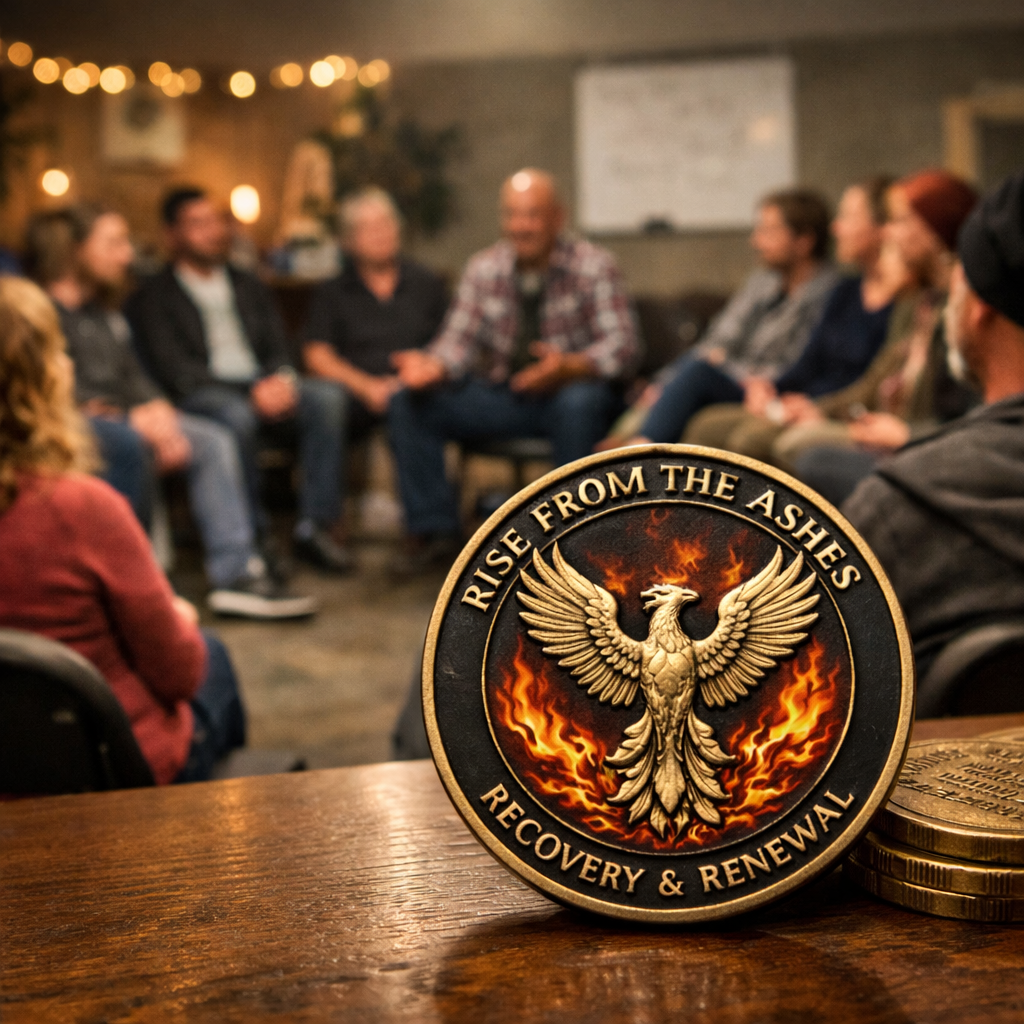
We closed the night by handing out coins with a phoenix rising from the ashes. A symbol as old as it is true: rebirth after destruction, life after collapse. On the back of each coin was the Serenity Prayer. Together we recited it, voices steady, some quiet, some strong, all united.
To be in that room meant that every person there had walked through darkness. And yet, here we were: laughing, eating, listening, praying, and believing again. Not by accident. Not alone.
As we step into 2026, I carry a deep sense that great things are on the horizon, that the hard seasons have not been wasted, but have prepared us for what’s next in our journeys. That the fire did not destroy us, but that it ultimately cleansed and strengthened us.
As long as we put our recovery first, there’s no telling what we can accomplish in 2026 and beyond.
Leave a Reply