Recovery asks something different of you.
It asks for rigorous honesty. It asks you to search yourself in all of your affairs. It asks you to live in alignment with what you know in your heart to be right. Business often rewards different instincts like protecting the bottom line, cutting corners, making decisions that are technically acceptable but don’t sit quite right in your gut. The principles of recovery and the incentives of business don’t always point in the same direction.
I don’t know if I would have stayed in the drug and alcohol field if I hadn’t met Dr. Wade.
When I first started working at SpiritLife Treatment Center, I was surrounded by people who genuinely wanted to help others and at the center of that culture was our clinical director, Dr. VonZell Wade.
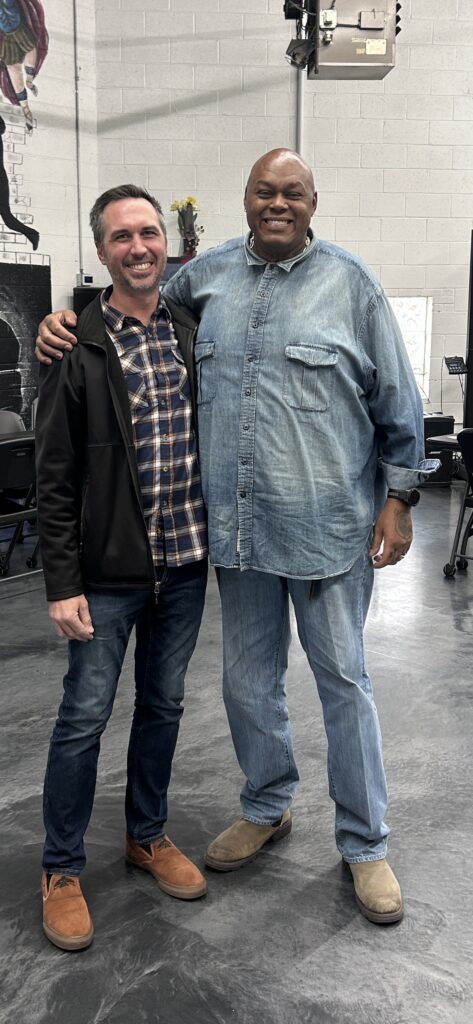
Dr. Wade had a presence about him. A towering man, well over six feet tall, clearly brilliant both in clinical practice and lived experience. But what struck me most wasn’t his intelligence. It was his heart. He cared deeply about the people we served and about the people he worked alongside. When Dr. Wade ran groups, he spoke from experience, not just theory. Even the most jaded or disengaged residents would perk up when he stepped to the front of the room. They listened because they trusted him.
But the biggest lessons I learned from Dr. Wade didn’t come from his groups. They came from the day-to-day work. Staff meetings. Supervision. Conversations in the hallway. Wrestling through difficult clinical decisions together. It was the culture he cultivated—one where we leaned on each other, challenged and encouraged each other.
Working in the recovery field doesn’t guarantee that you’ll be surrounded by people living by recovery principles. Sometimes you are. Sometimes you aren’t. And when you’re running a treatment program, the pressure is real: clinical decisions, census numbers, financial realities, staff burnout, and the constant weight of knowing people’s lives are at stake. I watched Dr. Wade navigate all of it.
There were moments when the clinical team was burned out. Anyone who has worked in treatment knows the feeling: heavy caseloads, endless documentation, and emotional exhaustion. Instead of pushing people harder, Dr. Wade would step in and run a large morning group for all the residents for a week so the rest of the clinical team could catch up on paperwork and recharge. No announcement. No credit taken. He just carried some of the load.
Another moment came at the beginning of COVID, when residents were getting nervous about what was happening outside the walls of treatment. Some were talking about leaving early. Dr. Wade gathered everyone together and asked them to play the tape forward.
“What happens if you leave right now? Where do you go? What does the next week look like? The world out there is dealing with a new sickness and it might make it’s way into here, but we are here dealing with another sickness and unlike COVID, which might kill you, the disease of addiction WILL kill you. That’s a fact. We can’t lose focus.” Slowly the room settled, you felt the temperature shift, and we went on to have some of the most uplifting and transformative communities during that time when the rest of the world was being turned upside-down.
What I was really watching during all those moments was someone refusing to compromise the principles he believed in, even when there was pressure to do otherwise. He wasn’t afraid to name the thing everyone in the room was avoiding or ask the uncomfortable questions. And more often than not, once the truth was on the table, the right decision became obvious.
Eventually Dr. Wade made the decision to leave SpiritLife. When he spoke to the staff about it, he talked about listening to his heart and listening to God. One thing he said that stuck with me was this: “You’re either working on someone else’s dream or you’re working on your own.”
These days Dr. Wade is still doing the work. We’re still in touch, and I still jump at the chance to attend any training he’s offering through Lost Dreams Awakening, the recovery community organization he runs with his wife Laurie, in New Kensington.
And today, as a business owner and leader in recovery myself, I often face decisions that aren’t easy. And I know my team (who are all in recovery themselves) are watching. Sometimes there’s financial pressure. Sometimes there’s operational pressure. It almost always comes down to – on some level – deciding what to put first: people or profit.
And in those moments, I often ask myself a simple question:
What would Dr. Wade do?
Not because he has all the answers, but because I’ve watched him consistently try to live by the principles he believes in—even when it isn’t convenient. Doing the right thing isn’t always the easy thing. In fact, it rarely is. And doing the right thing doesn’t guarantee everything will work out in your favor. But it does guarantee one thing: You get to sleep at night.


Leave a Reply